
Buspar
(Buspirone)
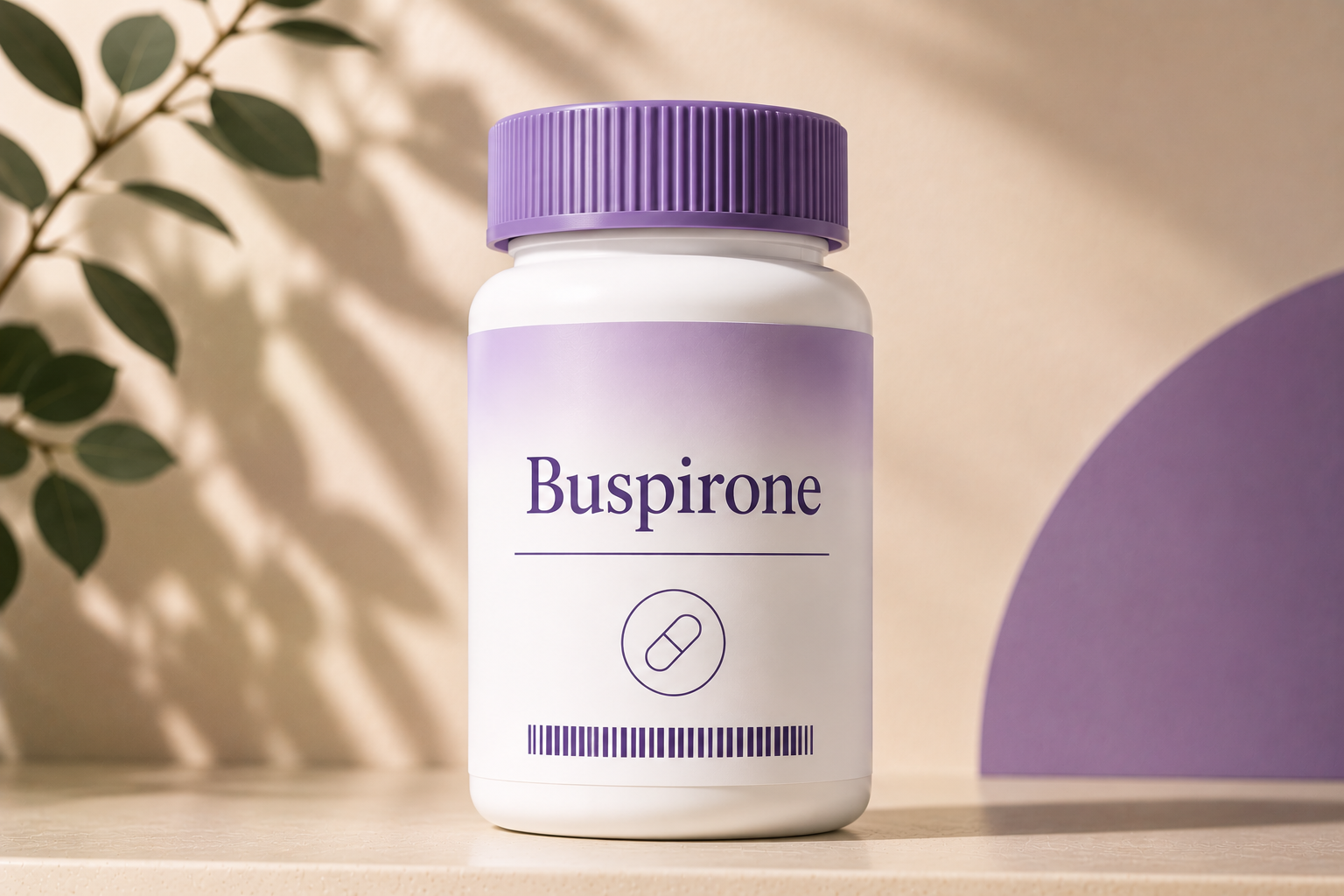
Buspar is a non-benzodiazepine anxiolytic used for generalised anxiety disorder. Unlike benzodiazepines, it is not habit-forming, does not cause sedation, and does not interact with alcohol — making it a safer long-term option for chronic anxiety.
Most patients pay less than $25 per appointment.






Buspar works differently from other anxiety medications — its active ingredient, buspirone, acts on serotonin and dopamine receptors rather than GABA. This means it does not produce the immediate calming effect of a benzodiazepine, but with consistent use over a few weeks it effectively reduces chronic anxiety without risk of dependence.
Getting help shouldn’t be hard.

Book a free 15-minute consult
Tell us a little about yourself — no pressure, no commitment. Just a conversation.

Meet your psychiatrist
Connect with a licensed provider via video or in person in Texas.

Attend weekly sessions
Flexible, personalised psychiatric care tailored to your life.
Meet the psychiatrists you'll actually talk to.
Board-certified psychiatrists with deep expertise in LGBTQ+ mental health and medication management.

Komal Nathani
Komal is an LGBTQ+ affirming psychiatrist who works with queer, trans, and gender-expansive adolescents and adults navigating anxiety, depression, ADHD, trauma, and identity. She offers a space where your full self is welcome, and brings real understanding to the intersection of queerness, culture, and mental health.
MD Psychiatrist
Adam Butera
Adam is an LGBTQ+ affirming psychiatrist with 23 years in private practice, offering care for depression, bipolar disorder, anxiety, PTSD, OCD, addiction, and ADHD. He takes time to understand each person as a whole human being, working with adolescents, adults, and seniors across diverse backgrounds.
MD PsychiatristReal questions. Honest answers.
-
Buspar (buspirone) is FDA-approved for generalised anxiety disorder (GAD). It is sometimes added to antidepressants to boost their effect on anxiety.
-
No — this is one of Buspar's key advantages. Unlike benzodiazepines, it does not cause physical dependence, tolerance, or withdrawal.
-
No. Buspar requires consistent daily use for 2–4 weeks before its anti-anxiety effects become apparent. It is not suitable as a rescue medication for acute anxiety.
-
Dizziness, headache, nausea, and nervousness are the most common, especially in the first week or two.
-
Yes — Buspar is frequently combined with SSRIs or SNRIs to enhance anxiety relief. Your psychiatrist will manage the combination carefully to avoid serotonin syndrome.
-
Benzodiazepines work immediately and powerfully but carry risk of dependence and sedation. Buspar is slower-acting but non-addictive, non-sedating, and suitable for long-term daily use.
-
Buspar does not cause withdrawal, so stopping is generally smoother than with benzodiazepines. Still, consult your psychiatrist before making any changes.
-
Book a free consult at Outspace. Our psychiatrists will assess whether Buspar is the right approach for your anxiety.