
Found Family and Doomscrolling: LGBTQ+ Life Online
Social media has been genuinely transformative for many LGBTQ+ people.
It is where communities formed in the absence of local queer spaces, where people first encountered language for identities they had been living but not naming, where young people in isolating environments found others who understood. It has also become a source of comparison anxiety, political overwhelm, online harassment, and a kind of low-grade addictive exhaustion that is difficult to disentangle from the genuine good it provides.
Both things are true.
Outspace supports LGBTQ+ people in navigating the benefits and harms of online life, because that navigation is increasingly a mental health issue.
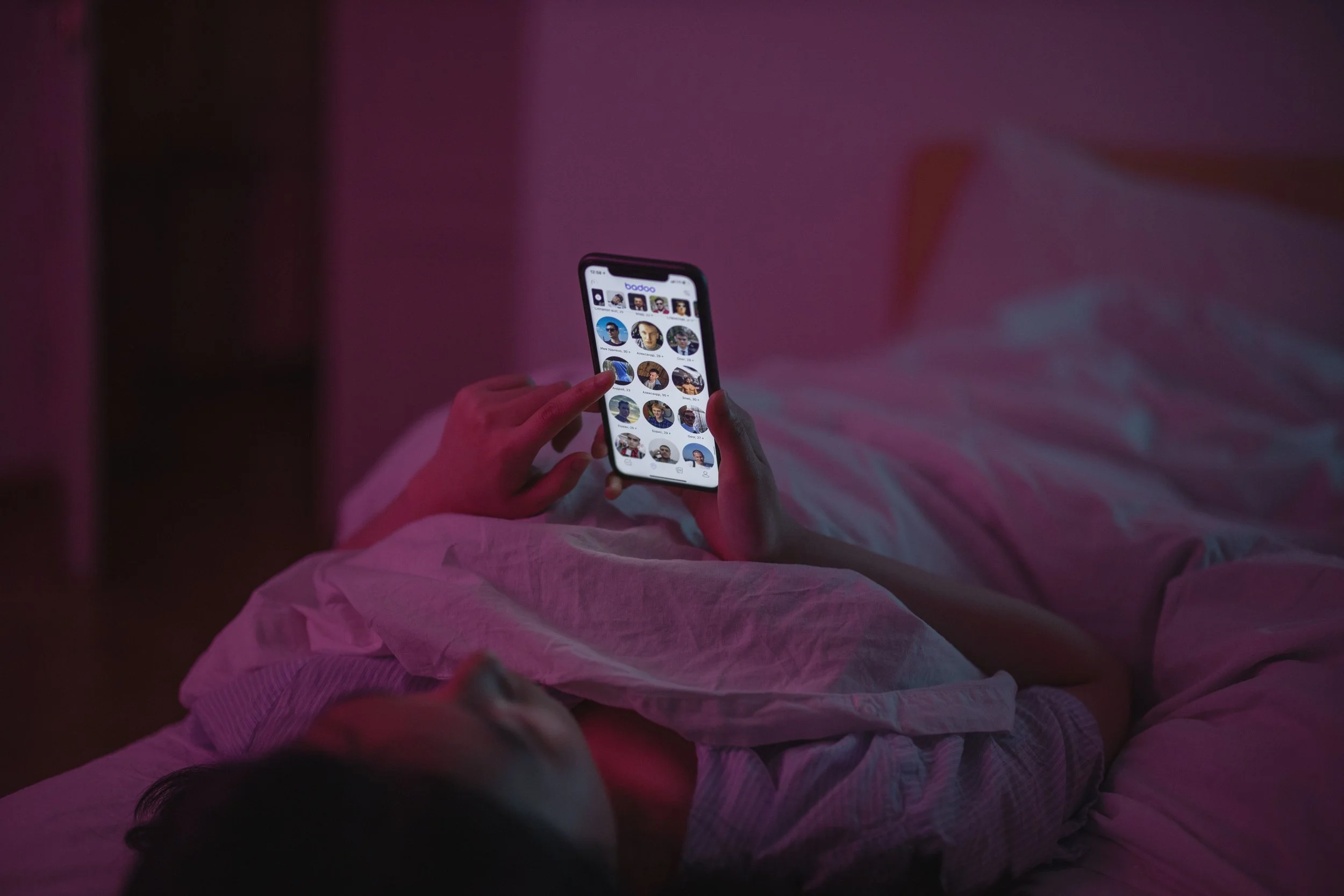
The Genuine Benefits: What Social Media Has Given Queer People
Community Where None Existed
For LGBTQ+ people in rural areas, conservative communities, or restrictive family environments, social media has provided access to queer community that simply did not exist locally. This access matters enormously for mental health. Community connection is one of the most consistently documented buffers against minority stress, and for people who cannot access it in person, online community fills a real gap.
Identity Discovery and Language
Many people have discovered or clarified their LGBTQ+ identity through social media. Finding a word for an experience you have been having, seeing other people describe what you thought was uniquely and inexplicably yours: this is one of the most significant things that online queer communities have offered. Research on LGBTQ+ young people consistently documents that online community plays a central role in identity development, particularly for those who cannot safely explore identity in their immediate physical environment.
Access to Information and Resources
Social media has also been a primary channel through which LGBTQ+ people access information about mental health, healthcare, legal rights, and community resources. For trans people navigating complex healthcare systems, for LGBTQ+ people in areas with few local resources, and for people newly exploring their identity, this access has been significant.
The Real Harms: What Social Media Also Does
Comparison and Inadequacy
Social media presents a curated version of queer life that can feel alienating rather than affirming. Seeing other LGBTQ+ people who appear more confidently out, more visibly political, more embedded in community, or further along in their transition can generate comparison anxiety and a sense of inadequacy. This is not unique to LGBTQ+ social media use, but it takes on specific dimensions in a community where visibility and confidence in identity are themselves fraught territories.
Online Harassment
LGBTQ+ people, particularly trans and non-binary people and LGBTQ+ people of colour, face significantly higher rates of online harassment than their heterosexual and cisgender peers. Research on LGBTQ+ youth specifically documents that online victimisation is associated with significantly worse mental health outcomes, including higher rates of depression, anxiety, and suicidal ideation. The same platforms that provide community also provide access to people who wish to harm.
Political Overwhelm and Doomscrolling
For LGBTQ+ people, social media is also where the political news arrives: the latest anti-trans bill, the hate crime, the legislative attack on community rights. The algorithm that serves this content does not distinguish between what is informative and what is traumatising. Research is clear that unregulated exposure to distressing news content compounds minority stress and anxiety. Many LGBTQ+ people describe a compulsive relationship with political news on social media that they know is harmful and cannot easily stop.
Algorithmic Outing and Safety Risks
Social media algorithms make assumptions about identity and surface content accordingly. For people who are not out, or who are selectively out, this can create real safety risks: family members or colleagues seeing LGBTQ+ content that reveals an identity the person had not disclosed, or targeted advertising based on browsing patterns that makes identity visible to others sharing a device. These are not hypothetical concerns. Research on LGBTQ+ online experiences documents these risks as real and consequential.

Building a Healthier Relationship With Social Media
Audit What Serves You
Not all social media use is equivalent. Time spent in affirming community spaces, learning something useful, or connecting with people you know is different from passive scrolling through political content or comparison-triggering feeds. Deliberately auditing which aspects of your social media use feel good and which feel draining is a useful starting point.
Set Boundaries Around Political Content
Given what research shows about the mental health impact of continuous political news exposure, setting deliberate limits is not avoidance. It is self-regulation. Muting or unfollowing accounts that primarily serve distressing political content, setting time limits on news-adjacent apps, and designating specific windows for political engagement are all practical strategies.
Treat Online Community as Real Community
Online LGBTQ+ community is real community, and it deserves the same investment and boundaries as in-person community. That means showing up, contributing, and also protecting your energy by not engaging with every conflict or distressing conversation.
Notice the Comparison Trap
When you notice comparison anxiety arising from social media content, naming it is the first step. The person whose transition looks effortless, whose family is perfectly accepting, whose identity seems fully resolved: you are seeing a curated version of a real and complicated life. That naming does not make the comparison feeling disappear, but it does interrupt the spiral.
Research published in Examining the Unique Online Risk Experiences of LGBTQ+ Youth documents both the benefits and specific risks that LGBTQ+ young people face online, providing useful context for understanding the dual nature of social media in queer life.
The Bottom Line
Social media is neither simply good nor simply harmful for LGBTQ+ mental health. It has provided community, identity, and access to resources that many queer people could not have found otherwise. It has also introduced comparison anxiety, harassment, political overwhelm, and safety risks that are specific to LGBTQ+ experience. Building a thoughtful relationship with it, rather than either embracing it uncritically or avoiding it entirely, is the most sustainable approach.
Outspace supports LGBTQ+ people in navigating all aspects of their mental health, including the ways that digital life intersects with queer identity and wellbeing,

Frequently Asked Questions
Is social media good or bad for LGBTQ+ mental health?
Both, depending on how it is used. Online community has genuine protective benefits, particularly for isolated LGBTQ+ people. Unregulated political news exposure and harassment have documented harms. The relationship to social media matters more than the fact of using it.
I've found community online that I don't have locally. Is that enough?
Online community is real and genuinely protective. It may not provide everything that in-person community does, but it is significantly better than isolation. Investing in it deliberately, rather than passively scrolling, tends to make it more beneficial.
I can't stop scrolling political content even though I know it makes me feel worse. What do I do?
This is a very common experience. App time limits, following curated lists rather than open feeds, and designating specific news windows can all help. Therapy can also help address the anxiety driving the compulsive checking.
I experience harassment online because of my identity. How do I protect myself?
Platform reporting tools, privacy settings, and community moderation all matter. More fundamentally, considering which platforms feel safer and investing more time in moderated community spaces can reduce exposure to harassment significantly.
My younger child is LGBTQ+ and spends a lot of time online. Should I be worried?
Online community is often genuinely important for LGBTQ+ young people, particularly those in less affirming local environments. Balanced concern about safety and harassment is appropriate, and keeping open communication matters more than restricting access.
Can therapy help with social media-related mental health issues?
Yes. Therapy can help you understand what drives your relationship with social media, build more intentional habits around it, and process the specific harms including harassment and political overwhelm that online life can produce.
