
They Built This Community. They Still Deserve Support: LGBTQ+ Elders and Mental Health
Older LGBTQ+ people are frequently the most overlooked members of the queer community.
Queer culture often skews young, leaving elders on the periphery of the community they helped build, and mainstream elder care assumes heterosexuality as the default, creating environments that range from uninformed to actively hostile for older LGBTQ+ people. The result is a population with specific, significant mental health needs that are systematically underserved.
Outspace believes that care across the lifespan matters, and that LGBTQ+ elders deserve the same affirming attention as every other part of the community.
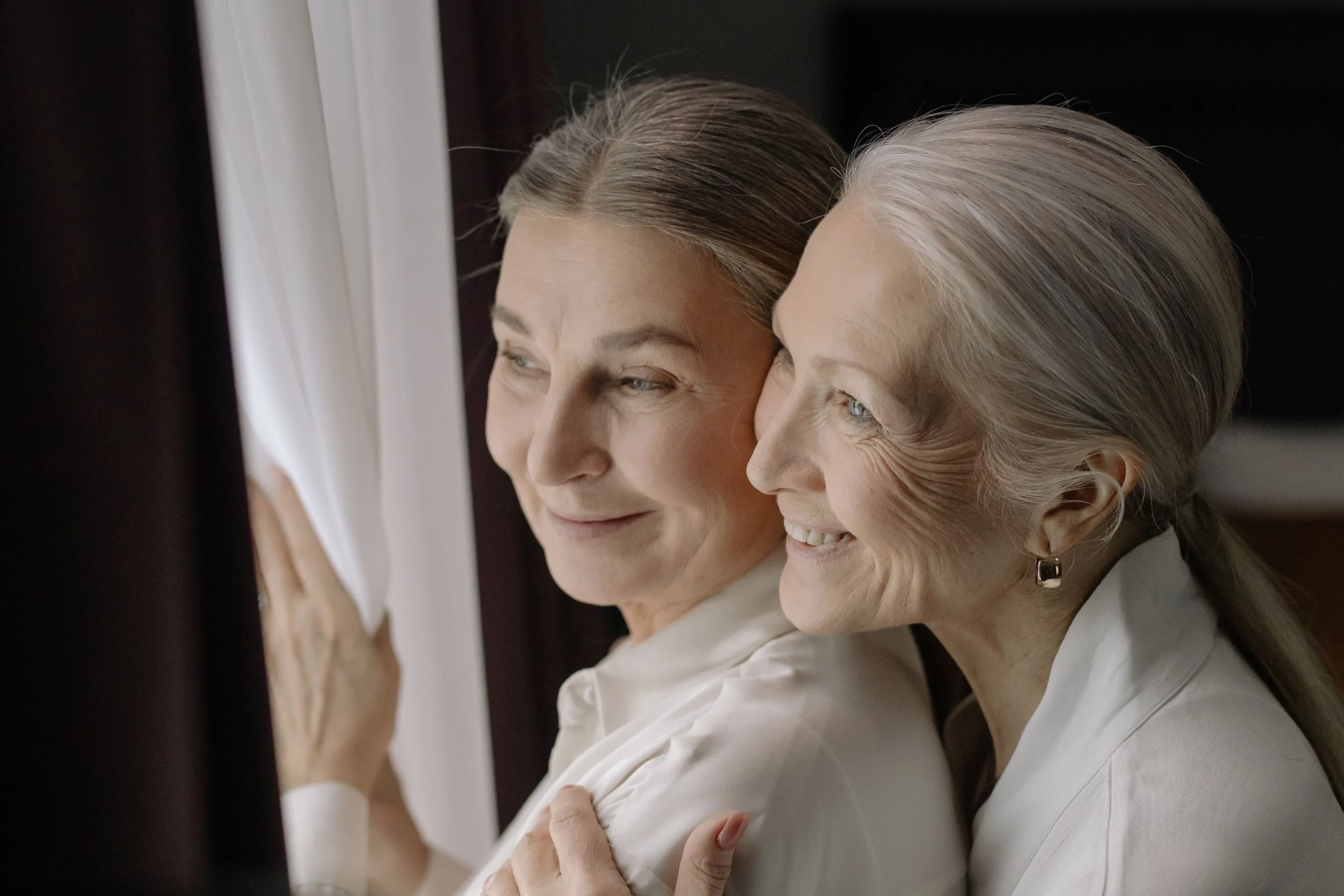
What LGBTQ+ Elders Have Lived Through
To understand the mental health needs of older LGBTQ+ people, it helps to understand what they have lived through. Depending on age, LGBTQ+ elders may have grown up under legal criminalisation of same-sex relationships. They may have lived through the AIDS crisis and the specific devastation it brought to gay and bisexual male communities. They will have navigated decades of legal and social change, from the removal of homosexuality from the DSM in 1973 to marriage equality and now the current period of regression. They may have spent years, or decades, in the closet before it was safe enough to come out.
That history is not only a record of hardship. It is also a record of extraordinary resilience, community-building, and survival. But the hardship left marks. Many LGBTQ+ elders carry grief, trauma, and losses that have never been adequately acknowledged or processed, particularly the losses of the AIDS epidemic, which took an entire generation of community.
The Specific Mental Health Challenges of LGBTQ+ Aging
Isolation and Loss of Community
As LGBTQ+ elders age, they often face the same social isolation that affects many older people: the loss of friends and contemporaries, reduced mobility and social participation, the shrinking of the world that comes with age. For LGBTQ+ elders, this is compounded by the specific reality that their community has often been organised around spaces, activities, and social contexts that become less accessible with age. The gay bars and community centres that were central to their social lives may no longer be places they can easily go. Chosen family networks that were the primary source of support may have shrunk through death or illness.
Re-Closeting in Elder Care Settings
One of the most documented and painful experiences of LGBTQ+ elders is re-closeting in elder care settings, returning to concealment of identity in nursing homes, assisted living facilities, and other care environments where heterosexuality is assumed and LGBTQ+ identity may not be safe to disclose. Research shows that LGBTQ+ older adults frequently hide their identity in care settings out of fear of discrimination, mistreatment, or inadequate care. This re-closeting is a significant source of psychological harm in people who may have spent decades building a life as openly LGBTQ+.
Compounded Grief
Older LGBTQ+ people, particularly those who lived through the AIDS epidemic, often carry a grief burden that mainstream culture has never adequately acknowledged. The loss of dozens or hundreds of community members, friends, and partners to AIDS, in a context where mainstream society was often indifferent or hostile, is a specific form of collective trauma. Many survivors have never had the opportunity to grieve these losses fully, and that grief persists.
Health Disparities
LGBTQ+ older adults face documented health disparities compared to straight and cisgender peers. Higher rates of depression and anxiety, higher rates of disability, and less access to social support all contribute to worse physical health outcomes as well as mental health challenges. For trans elders specifically, the interaction of aging with gender identity and the legacy of limited access to affirming healthcare creates additional complexity.
What Affirming Care for LGBTQ+ Elders Looks Like
Affirming care for older LGBTQ+ people starts from the same principles as affirming care at any age, but with specific attention to the historical and developmental context that shapes the experience of this cohort.
A genuinely affirming therapist for LGBTQ+ elders understands the historical landscape they have navigated. They hold the AIDS crisis as the significant collective trauma that it was. They understand re-closeting in care settings as a real phenomenon and a genuine harm. They do not assume that because someone is older they are more conservative about their identity. And they take seriously the specific grief and loss that many LGBTQ+ elders carry without adequate acknowledgment.

Practical areas where affirming therapy supports LGBTQ+ elders include processing grief and loss, particularly losses from the AIDS epidemic; navigating elder care settings and healthcare systems that may not be affirming; addressing isolation and supporting community connection; and managing the interaction between aging and identity, including for trans elders navigating healthcare in a hostile political environment.
SAGE USA at sageusa.org is the leading national organisation advocating for LGBTQ+ elders and provides resources, community, and direct services.
The Bottom Line
LGBTQ+ elders have been through a lot. They built community in the face of criminalisation. They survived an epidemic that took a generation. They navigated decades of legal and social change. They deserve care that sees and honours that history, and that addresses the specific mental health needs that come with having lived it.
Outspace is committed to affirming care across the full LGBTQ+ lifespan, including for elders whose needs are too often invisible.
Frequently Asked Questions
I'm an older LGBTQ+ person and most mental health resources seem aimed at young people. Is there support for me?
Yes, and you deserve it. Affirming therapy is available at any age, and good affirming therapists will understand the specific historical and developmental context of older LGBTQ+ experience.
I lived through the AIDS crisis and have never properly processed those losses. Is it too late?
It is never too late. Grief that has been carried for decades can still be processed, and doing so often brings real relief and a different relationship to what was lost.
I'm worried about being re-closeted if I enter a care facility. What are my options?
SAGE USA and LGBTQ+ elder advocacy organisations can provide guidance on finding affirming care facilities and on your rights in care settings. Documenting your identity and care preferences in advance matters.
My chosen family has shrunk significantly as people have died. How do I rebuild community in older age?
SAGE and LGBTQ+-affirming senior programmes provide community specifically for older queer people. Online community is also accessible regardless of mobility or geographic constraints.
I came out later in life and am now older. Do my needs look different from those who were out young?
Yes, in some ways. Late coming out in older age has its own specific dynamics, including the navigation of existing relationships and a lifetime of choices made without this self-knowledge. Affirming therapy can hold that complexity.
As a trans elder, the current political climate is affecting my healthcare access. What support is available?
Affirming mental health support is available regardless of medical care access. Trans-specific organisations and legal advocacy groups can provide guidance on healthcare rights and access in the current environment.
